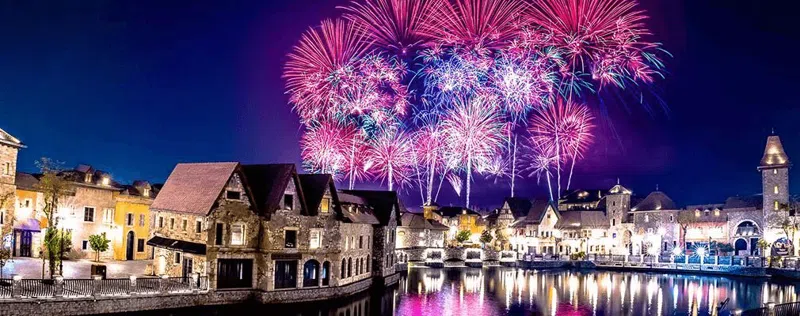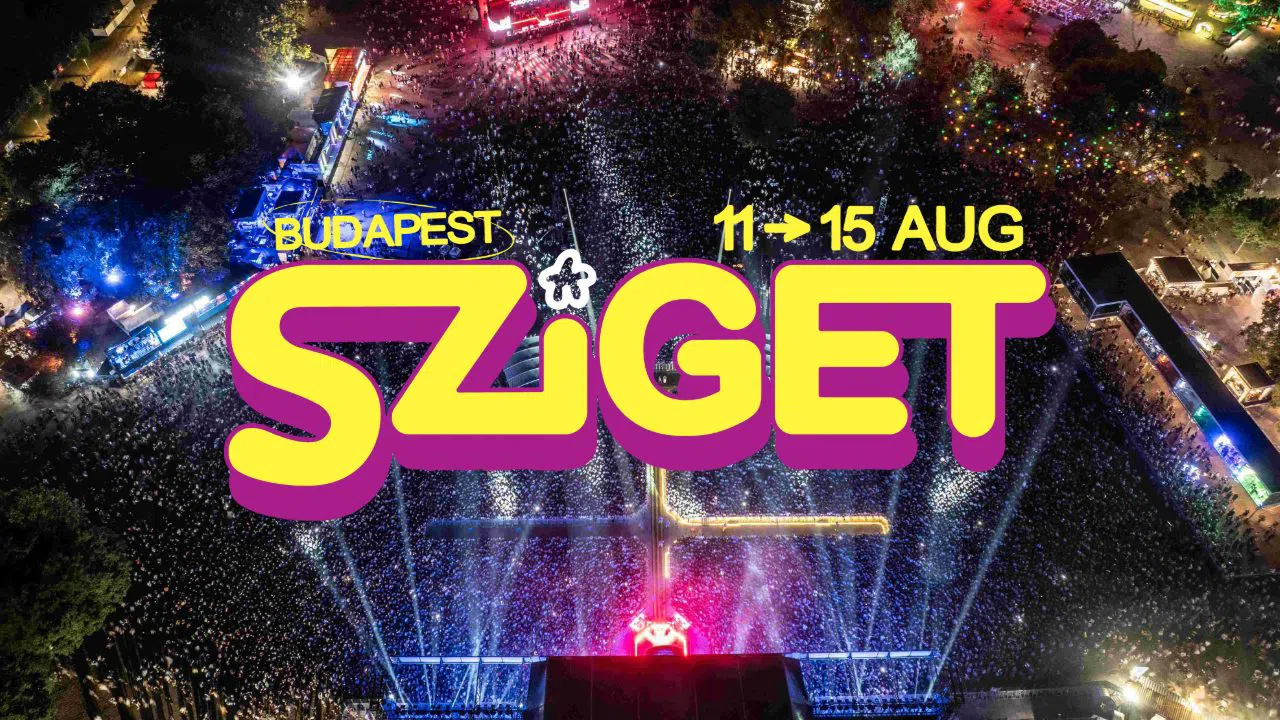

The stages come down in the third week of August and Óbuda Island reverts to what it is the other fifty-one weeks of the year: a flat, scrubby stretch of District III with a rowing lake, some dog walkers and a lot of cracked tarmac. For five days before that it is the loudest square kilometre in Central Europe. In October 2025 it looked like neither version would exist in 2026, and the fact that both did is the most interesting thing that happened to Budapest nightlife this year.
The week the island nearly didn't happen
Sziget Festival (Óbuda Island, District III) came close to stopping. Its British-American owners (Superstruct, held by the private equity house KKR) walked away after heavy losses, and in October 2025 Budapest's city council rejected a ten-year land deal for the site. For a few weeks there was, on paper, no 2026 festival: no agreement, no island, nothing to sell tickets to. Founder Károly Gerendai came back, negotiated a fresh multi-year deal for the island, and the festival ran 11-15 August 2026.
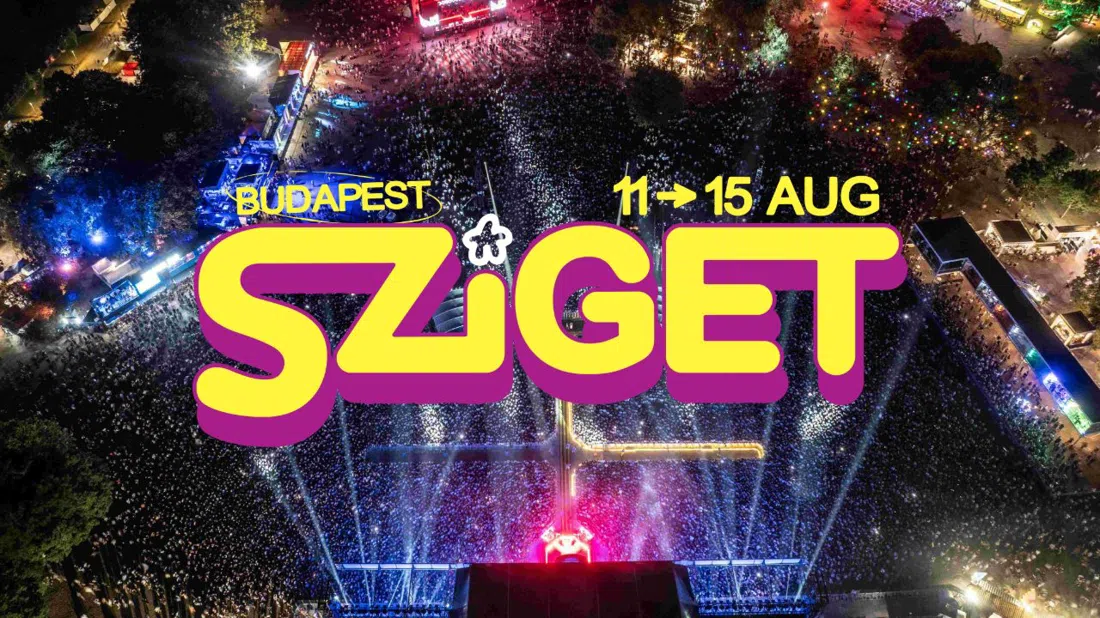
It ran smaller. Roughly 360,000 attendances across the week, against 530,000 in 2019. If your memory of Sziget is the crush at the bridge and a forty-minute wait for a beer, 2026 was a different animal: shorter bar queues, actual room on the grass, far fewer of the roaming stag clusters that used to define the back half of the week. Whether that counts as a rescue or a managed shrink is an argument you will have with every bartender in the city. Either way, it is the festival you will get next year.
The 2027 edition is fixed for 10-14 August and tickets are already on sale. Prices are published in euros, not forints: a five-day pass is €349 plus a €23 booking fee, the 21-and-under pass is €279, and VIP is €569. Those are the real numbers, not an early-bird teaser that expires without warning.
Buying passes and camping without splitting your group
Sziget has no door policy in any meaningful sense. It is a wristband, a bag check and a long walk. That makes it the easiest big night out in Budapest for a party of ten or fifteen: nobody is getting refused for shoes, numbers or a loud accent. The catch is the camping.
Group camping and shared tents are sold directly by the festival, not through resellers, and the zones fill in tiers. Book in dribs and drabs and you will end up scattered across three zones on opposite sides of the island, which means you never see each other after the first afternoon. Buy in one transaction, as early as you can bear to pay. If anyone in the group is on a 21-and-under pass, check the ID rules before you arrive rather than at the gate.
Budget past the ticket. On-site food and drink sit well above city-centre prices: assume roughly double what the same beer costs in District VII. The site runs on a cashless top-up system, so check the refund window for any unspent balance before you leave the island. It closes within days, and plenty of people donate the remainder to the organisers by forgetting.
Getting there is straightforward and badly explained everywhere else: take the HÉV suburban line H5 north to Filatorigát and walk. Late at night the HÉV thins out and the festival's own shuttles and night buses do the work, so know your route home before you are tired and shouting.
Where the island's volume goes in autumn
Sziget is five days and then nothing. The city's actual live-music spine runs all year, and in October it is already busier than the island ever is in June.
A38 Ship (moored on the Buda bank at Petőfi Bridge, District XI) is a converted stone carrier and the one Budapest venue that has been voted the best bar on a boat anywhere in the world. Three separate things happen on it. The terrace is free entry, walk-in, and the single best cheap move in the city at sunset: you sit on the water looking back at the lit-up bank. The bistro takes groups. The hold is a concert space with concrete-hard sound, a low ceiling and no seats, tickets about 4,000-12,000 HUF.

That hold is standing-room only, which matters if you are twenty people: you will not stay together, so stop trying. Pick a bar to regroup at and let everyone find their own sightline. The programme from October 2026 straight through to April 2027 is dense (Allie X, Danko Jones and Arab Strap are all booked) and it does not stop for winter. If you are organising something private, the ship hires out whole, and the bow studio hires separately.
Turbina Kulturális Központ (District XI) is where you go for the current Budapest scene rather than the party circuit. It is small, gig-led and unglamorous: standing room, no table service, tickets around 3,500-9,000 HUF. Tender plays on 14 October 2026, with Injury Reserve and Barns Courtney further into a calendar already booked into 2027. Perfect for up to a dozen people. Hopeless for thirty: you will be standing in the doorway.
The other island, back after ten years dark
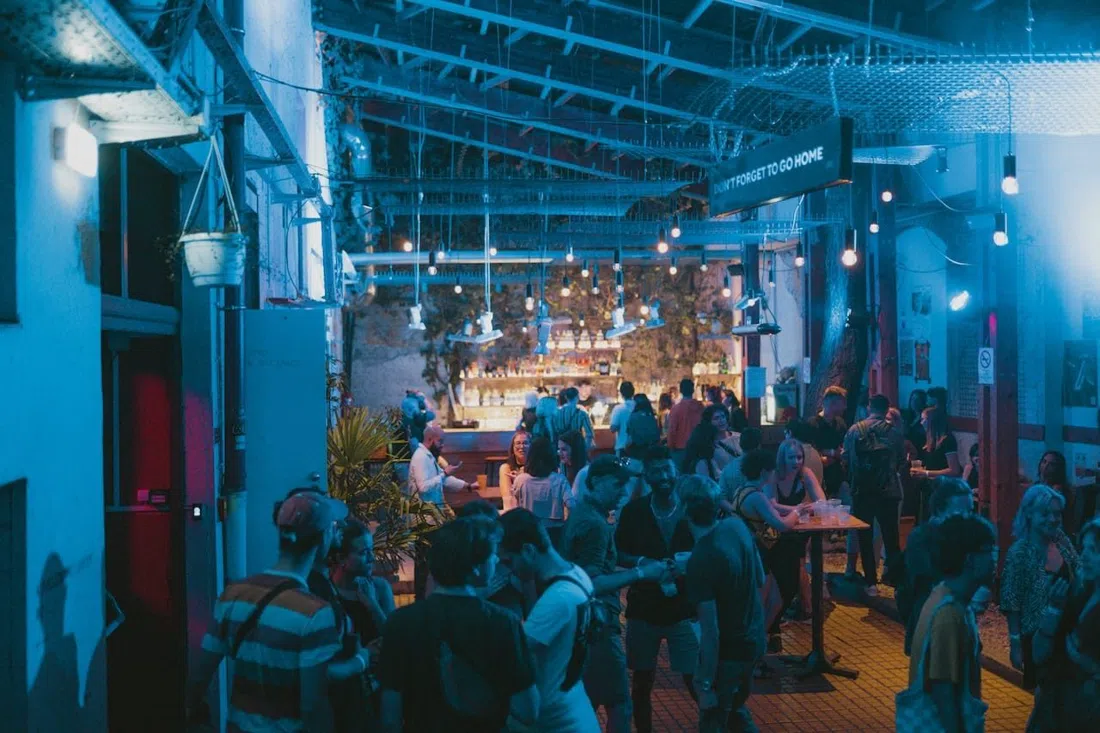
Óbuda Island is not the only island with a nightlife story in 2026. Holdudvar (Margaret Island) reopened in June 2026 after a decade shuttered, and if you remember the original, manage your expectations: this is a casual garden for pizza and cocktails, not the late club it was. Pizza runs about 4,500-6,500 HUF and cocktails about 3,500-4,500 HUF. The reason to go is the setting (mature trees, river on both sides, no traffic noise) rather than the drinks list.

Check the days. It currently runs Thursday and Friday to Sunday only, and there is nothing bleaker than walking twenty minutes across the island to a locked gate. It also works properly as an events venue: 230-300 indoors, 350-800 outdoors, with an LED wall and PA available, and it takes weddings, parties and corporate groups. If you are the person tasked with finding somewhere for forty people in July, start here.
The one address that always lets you in
Some nights you are not curating anything. You are moving a large group of mixed ages and tolerances, and you need a venue that cannot refuse you.
Instant-Fogas Complex (Akácfa utca, District VII) is the blunt answer. Free entry every single night, 1,200 square metres, a different genre per room, open daily from 18:00 to 06:00. It is Central Europe's largest party complex and it is built for exactly this: everyone enters, everyone finds their own room, nobody gets turned away at 01:00 for being eleven people. The trade-off is plain: at weekends it is wall-to-wall visitors and you will hear very little Hungarian. Accept that or go elsewhere; don't complain about it afterwards.
Budapest Park (District IX) is the big open-air alternative and is now formally part of the Sziget story: it came in as the festival's partner and ran its own Hungarian stage on the island in 2026. Thousands of capacity, no restrictive door, club nights around 3,000-6,000 HUF and concerts 6,000-25,000 HUF. One hard limitation: it is seasonal. The 2026 season ran 22 April to 4 October, there is no indoor winter version, so it is closed until spring 2027. Check dates before you promise anyone a night there.
Akvárium Klub (Erzsébet tér, District V) nearly lost 2026. A scare in September 2025 had it suspending the first half of the year for state-ordered maintenance; the operator rescheduled the work, and the lease now runs to 2029 with a five-year option. It is open and programming normally, with events on the night of 5 October 2026. Main Hall, Small Hall and a bistro, free to 3,500 HUF on club nights, 4,000-15,000 HUF for concerts, and it handles groups and corporate bookings without drama. The free-entry nights are the low-risk option when you don't know what anyone wants.

Dürer Kert (District XI, down by the river) is the alternative-scene institution that lost its original garden and rebuilt itself by the water. Relaxed, unpretentious door, several rooms, free to 4,000 HUF for club nights and 5,000-15,000 HUF for concerts. It is operating now with a programme booked into January 2027, and the garden, which absorbs large summer parties better than anywhere else on this list, reopens each April.
Szimpla Kert deserves a second look in daylight
Szimpla Kert (Kazinczy utca, District VII) is twenty-two years old, still in the same building, and still the one everyone tells you to skip. Skip it at midnight on a Saturday, fine. Entry is free but capacity is 580 with one-out-one-in on Friday and Saturday, so either arrive before 22:00 or stand in a queue of people filming themselves. Costumes get refused. So does obvious drunkenness. Beer is about 1,500-2,000 HUF. Split a big group: fifteen people will not clear the door together.
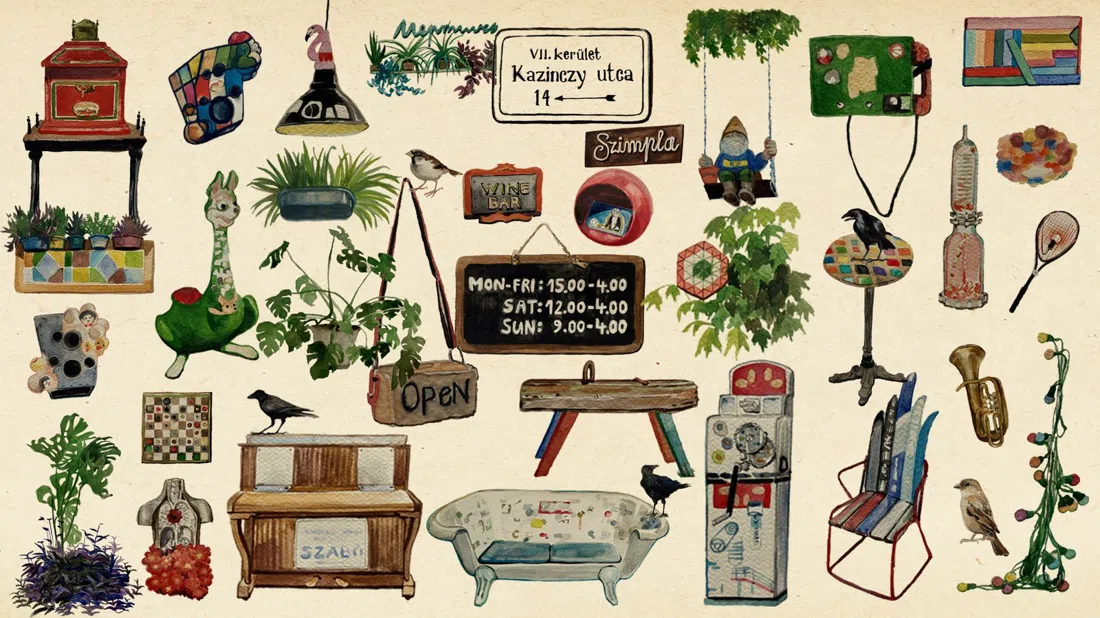
The daytime is what the tourist-trap label misses. There is a Sunday farmers' market in the courtyard, a bike flea market, film nights. Go at 11:00 with a coffee and you will see what it actually is, a culture space that happens to sell beer at night.
Cover charges, touts and the streets to watch
The venues above all publish their entry prices, which is precisely why they are the ones listed. The scam in this city isn't the famous places. It is the unmarked bar on a side street off the party squares, where someone invites your group in, there is no price list, and the bill arrives with a cover charge per person plus a service charge plus a mystery line item. Walk out of anything that has no menu with numbers on it. Never accept a drink bought for you by a stranger who then joins your table.
Taxis: use the Bolt app or call Főtaxi. Do not get into a cab idling outside a club, ever, however tired you are. At any card terminal, if the machine offers you a choice of currency, pay in forints; the on-the-spot conversion rate is always worse. Avoid the standalone yellow-and-blue exchange ATMs in the tourist streets and use a bank machine.
When the island freezes over
By November the island is empty, the open-air venues are shut and the rooftop season has technically ended. That is when 360 Bar (Andrássy út, District VI) puts up its heated igloos. This is the closest thing Budapest has to an outdoor night out in January, and it runs in a different register from everything else here: a smarter door, reserved tables, a minimum spend on the igloos, cocktails around 3,500-5,000 HUF.
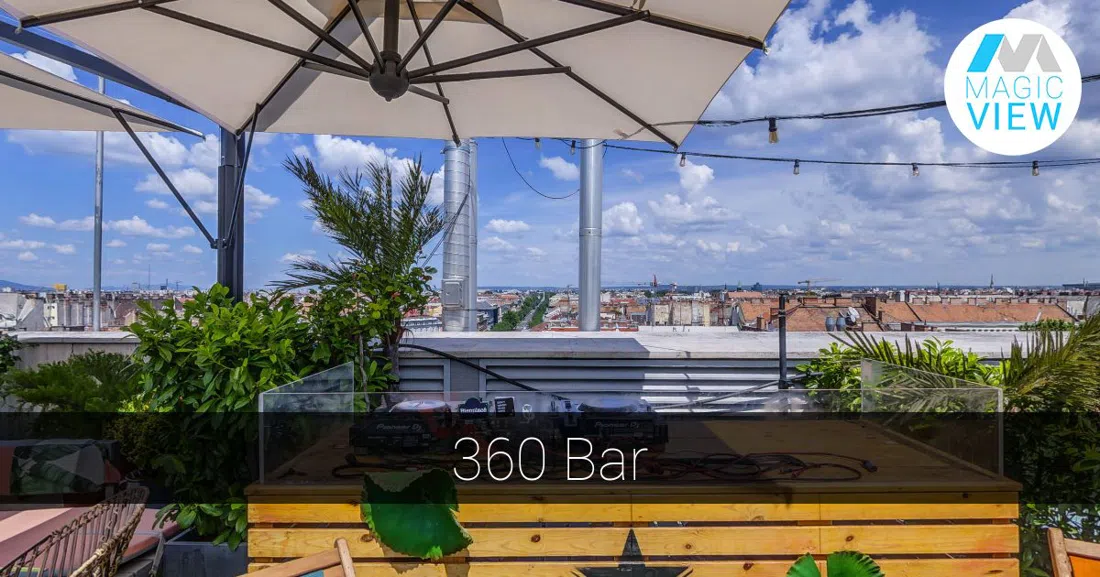
It is not a group venue. Large noisy parties are routinely turned away, so keep it to six or eight, book the igloo in advance rather than hoping, and treat it as the civilised start to a night rather than the end of one.
Practical stuff
Get a 72-hour BKK travelcard on arrival and stop thinking about tickets. Inspectors work the metro escalators and the HÉV platforms hard, and fines are instant and cash-hungry. The HÉV H5 is your line for Óbuda Island, trams 4 and 6 run all night along the Grand Boulevard, and the night bus network is good enough that a taxi is a choice rather than a necessity.
Cards work almost everywhere, including every venue above, but carry 10,000-20,000 HUF in small notes for cloakrooms, market stalls and the odd bar with a card minimum. Nothing here prices in euros except Sziget passes. If a bar quotes you a euro price, that is a warning, not a convenience.
Mid-August is the island, and the city is hot, full and expensive, so book beds months out via Budapest hotel search. Late September to early November is the sweet spot: A38, Dürer Kert, Turbina and Akvárium are all programming, prices are normal, and Budapest Park is just closing. December to March, you are indoors or in an igloo.
A realistic night out, drinks and entry and transport included, is 12,000-20,000 HUF per person on the free-entry circuit and 25,000-40,000 HUF if you are buying concert tickets and rooftop cocktails. Sziget sits outside that entirely: call it €450 per head for the 2027 pass, camping and on-site spending before you have bought a single flight.
For districts, food and the daytime version of the city, start with the Budapest guide.